Beyond the Air Mauritius Scandal: The Imperative of Governance Reform
Editorial
The recent parliamentary disclosures regarding Air Mauritius, followed swiftly by the suspension of seven senior managers, mark a watershed moment in the governance of our state-owned enterprises. For years, the national carrier — once the pride of the country — has been buffeted by storms that were as much man-made as they were economic. The revelations now surfacing from the Kroll forensic investigation report do not merely describe financial loss; they outline a narrative of systemic betrayal, where the “Jewel in the Crown” was treated not as a strategic national asset, but as a chessboard for personal gain and cronyism.
It is imperative to look beyond the headlines of suspensions and allegations. This is not just a story about Air Mauritius; it is a diagnostic of a deeper malaise that has afflicted various state institutions, from the banking sector to infrastructure development. The public demand is no longer just for transparency — it is for accountability that goes beyond the fleeting spectacle of suspensions and arrests.
The Anatomy of Mismanagement
The Prime Minister’s recent address to Parliament pulled back the curtain on a decade of fleet-related decisions that defy economic logic. The cold statistics are damning: four aircraft sold at a loss of Rs 1.2 billion, a fleet that suffered 100 groundings in a decade due to supply chain failures and technical negligence, and the procurement of assets that allegedly ignored internal economic warnings in favour of questionable leasing arrangements.
The allegations are profound: the pursuit of a criminal conspiracy to favour specific lessors, the submission of alleged falsified reports to the Board of Directors, and the wilful omission of critical airworthiness defects during overseas inspections. When senior officials are implicated in deliberately misleading their own boards, it signals a collapse of the fundamental checks and balances that define a functioning organisation.
Furthermore, the potential for civil action against former administrators for negligence during the voluntary administration period adds a layer of complexity. If those tasked with the fiduciary duty of restructuring the company failed to protect the interests of the taxpayer — whose money served as the ultimate cushion — then the legal pursuit of damages is not merely a bureaucratic formality; it is a moral necessity.
The Broader Crisis of Governance
Air Mauritius, unfortunately, is not an isolated case. Across our landscape, we have seen a recurring pattern of “toxic loans,” dubious state land transactions, and irregular procurement processes. Whether it involves medical supplies during a pandemic or multi-billion rupee infrastructure contracts, the diagnosis remains consistent: the erosion of institutional integrity.
For too long, our public institutions have been treated as fiefdoms. Partisan appointments have frequently prioritized political loyalty over professional competence, leading to a culture where “merit” is an alien concept. When institutions are managed by individuals whose primary allegiance is to political patrons rather than to the sustainable health of the enterprise, the result is inevitable: the transformation of once-profitable entities into canards boiteux (lame ducks), forever reliant on the taxpayer’s life support.
The public has grown weary of the “investigation cycle.” We have seen reports commissioned, findings tabled, and scandals debated, only for the momentum to dissipate before the judicial process can deliver a final verdict. The current sentiment is clear: headlines about suspensions and investigations are welcome, but they are insufficient. The nation is waiting for the judicial system to demonstrate its ability to act swiftly, fairly and impartially. They want to see fair trials, rigorous evidence-based prosecutions, and, crucially, sanctions that reflect the severity of the damage inflicted on the national exchequer.
The Path to ‘Changement’
A government elected on the platform of Changement (Change) now faces its ultimate test. The restorative work required is twofold: punitive and systemic.
On the punitive side, the Financial Crimes Commission (FCC) and the Police must operate with absolute autonomy. The Board of Air Mauritius has signalled its intent to refer these matters for criminal investigation and civil litigation; this momentum must be maintained without interference. The legal system must demonstrate that the law is not a shield for the powerful but a sword against those who abuse the public trust.
On the systemic side, we must move toward a fundamental redefinition of corporate governance in state-owned enterprises. This requires:
1. Depoliticised Boards: The era of appointing political nominees to technical boards must end. Boards must be composed of industry experts, independent directors, and professionals with a proven track record of ethical management.
2. Strict Procurement Protocols: The “confidentiality clauses” that have served as a veil for non-transparent leasing and purchasing agreements must be scrutinised. While commercial sensitivity is a reality, it cannot be used to hide the squandering of public funds.
3. Institutional Independence: Public enterprises must be insulated from executive overreach. Their mandate should be explicitly focused on national interest, long-term sustainability, and professional management.
The “Jewels in the Crown” were built on decades of hard work, vision, and operational excellence. They were meant to be beacons of our nation’s progress, admired not just locally but across the African continent. Watching them brought to their knees by incompetence and greed has been a painful experience for every taxpayer who has had to subsidize these failures.
The suspensions at Air Mauritius are the first step in a long-overdue cleaning of the house. However, the nation is looking for a deeper transformation. We cannot afford another decade where public money is used to rescue institutions weakened by preventable mismanagement. We want to see a country where the rule of law is the final arbiter, where merit is the primary currency of career advancement, and where public service is understood to be exactly that — service to the public, not an opportunity for self-enrichment.
Arrests and reports are the opening pages of this chapter; the public will be waiting to read the ending. The government must now ensure that justice is not only initiated but concluded, and that the structural rot is excised, not merely covered up. The time for excuses has passed; the time for accountability has arrived. Only through such firm, decisive action can we restore the dignity of our national institutions and honour the trust of the people.
Mauritius Times ePaper Friday 3 July 2026
An Appeal
Dear Reader
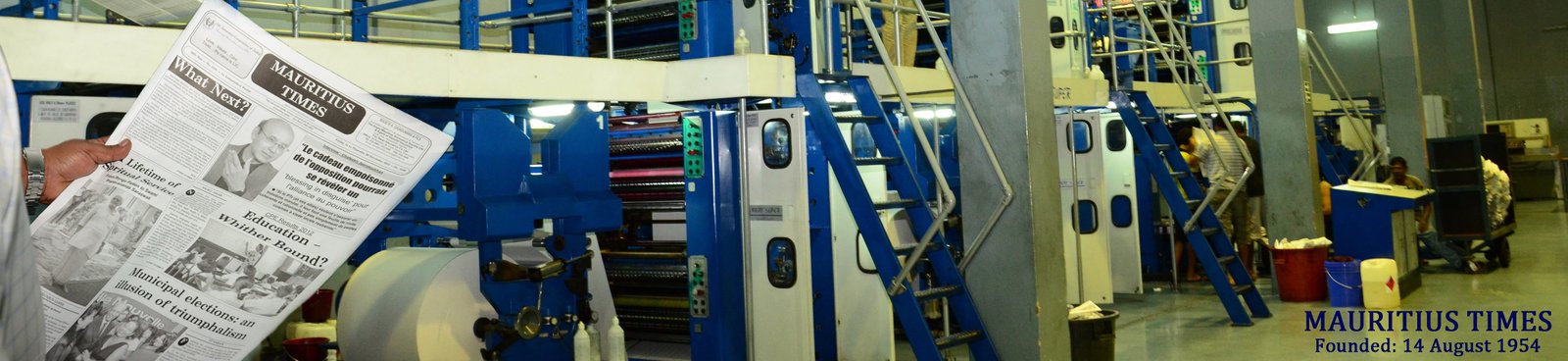
65 years ago Mauritius Times was founded with a resolve to fight for justice and fairness and the advancement of the public good. It has never deviated from this principle no matter how daunting the challenges and how costly the price it has had to pay at different times of our history.
With print journalism struggling to keep afloat due to falling advertising revenues and the wide availability of free sources of information, it is crucially important for the Mauritius Times to survive and prosper. We can only continue doing it with the support of our readers.
The best way you can support our efforts is to take a subscription or by making a recurring donation through a Standing Order to our non-profit Foundation.
Thank you.

