Hindu Marriage Act
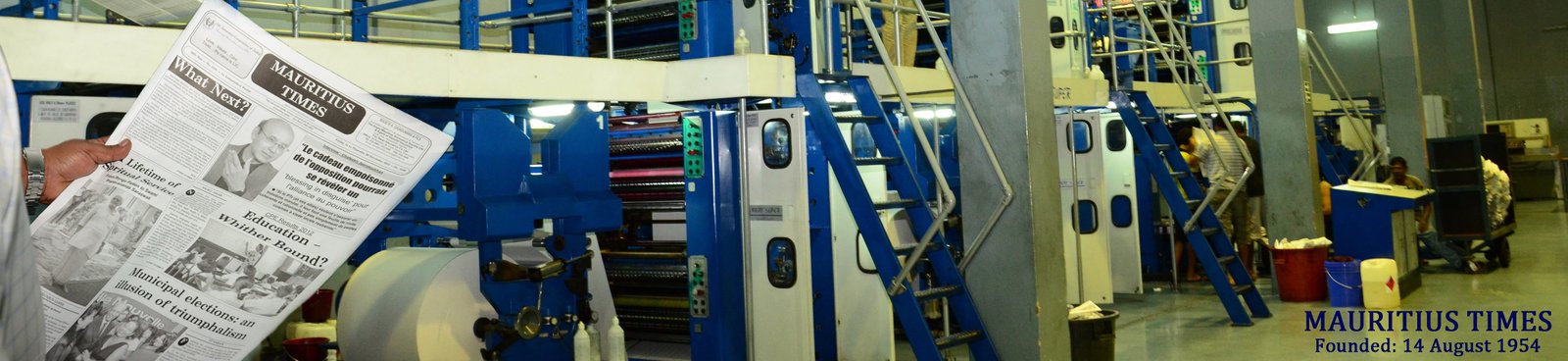
Mauritius Times – 71 Years
Marriage is as old an institution as man himself. All through its chequered history, this institution has gone through countless vicissitudes, and its content and meaning have sharply changed according to different countries and traditions. In India, where traditions seem to die harder than anywhere else, the recent attempts to reform marriage laws raised a huge hue and cry. But subsequently, the din subsided, and today the reformed law relating to Hindu marriage is taken for granted. In the following article, Surabhi Mehta, a correspondent of Femina, makes some observations on the Hindu Marriage Act.
Since cases of inter-caste, inter-religious, inter-provincial marriages are steadily increasing, the Indian legislators have passed an Act which enables two people to get married in spite of so many barriers. This Act is known as The Special Marriage Act, 1954, and applies to all Indian citizens (except those of Jammu and Kashmir), whatever their caste, religion, or province. It also applies to Indian citizens residing abroad who wish to take advantage of its provisions.
Polygamy Illegal
Thus, a marriage between any two Indian citizens may be solemnized under this Act if certain conditions are fulfilled at the time of the marriage. Hence, the first condition is that neither party has a spouse living. This makes monogamy the rule, as long as the marriage is solemnized under this Act. Secondly, that neither party is an idiot or a lunatic. The third condition is that the male must have completed the age of 21 years and the female, 18 years.
The fourth condition is that the parties are not “within the prohibited degrees of relationship” — this means that the bride and the bridegroom should not be related to each other in such a way that a marriage between them would be illegal. Hence, marriages between cousins, uncles and nieces, aunts and nephews, etc., are not allowed, and a long list of “prohibited relationships” is given in the Schedule to the Act.
Marriage Between Cousins Null!
There have been instances of marriages between cousins, but such marriages are null and void under this Act, as they are contrary to one of its basic conditions. A marriage which is solemnized under this Act, but which is contrary to any one of the four conditions laid down by it is void. Usually, when a marriage is void, it is deemed never to have taken place at all, with the result that all the children of such a union are illegitimate. This Act, however, makes a departure from the ordinary rule by providing that any child begotten or conceived during such a marriage (i.e., before the marriage is declared null and void by a Court) shall be deemed to be legitimate. This provision, however, is not to be construed as conferring upon any such child any right in respect of the property of any person other than its parents (e.g., grandparents or uncles). The intention of this Act is to legitimize the children with respect to succession to the property of their parents, but the legitimacy will not be carried any further.
It is up to the parties to decide whether they want to marry under this Act or not. A couple can always get married according to other forms, such as their own religious rites, but a marriage under this Act is especially beneficial to a couple who belong to different religions.
Once a couple decides to marry under this Act, either or both of them must give notice in writing (which must be in a special form) of their intention to marry to the Marriage Officer of the district in which at least one of them has resided for a period of not less than 30 days immediately before the date on which such notice is given. Such notice must be published by the Marriage Officer by affixing a copy of it in his office, and he must also enter it in the Marriage Notice Book.
After 30 days have expired since the publication of the notice, the marriage may be solemnized, provided no objection has been raised by anyone on such publication.
Before the solemnization of the marriage, the bride and the bridegroom must make a declaration stating their respective ages, that they have no other spouse living, and that they are not within the prohibited degrees of relationship. They must sign this declaration, along with three witnesses, and the Marriage Officer must countersign.
The marriage may then be solemnized in the presence of the Marriage Officer and these witnesses, either at the office of the Marriage Officer or at any other place (when a small fee may be charged to cover travelling and other expenses). The marriage may be in any form, but to make it complete and binding under this Act, each party to the marriage must say to the other, in the presence of the Marriage Officer and the three witnesses, “I… take thee… to be my lawful husband (or wife).”
After the solemnization of the marriage, the Marriage Officer enters a certificate in the Marriage Certificate Book, and such certificate must be signed by the couple and the three witnesses.
* * *
In The Civil Service
The following list of promotions in and appointments to the Public Service for the week ended October 6th, 1960, is released from the Colonial Secretary’s Office.
Promotions
Mr M.A.R. Rose, Malaria Inspector Grade I, Health Department, promoted Zone Supervisor.
Mr R. Maugendre, Executive Officer, promoted Senior Executive Officer.
Mr J.M.F. Daurat, Customs and Excise Officer Grade II, promoted Customs and Excise Officer Grade I.
Mr L. Adolphe, Inspector Grade II, Public Works and Surveys Department, promoted Inspector Grade I.
Messrs J. Cunden, D. Seewooruttun, B. Gunesh and I.C. Bissessur, Clerical Officers, promoted Executive Officers.
Mr X. Souroup, Postal Clerk Grade II, promoted Postal Clerk Grade I.
Mr R. Saddul, Clerical Officer, promoted Higher Clerical Officer.
Mr M. Putty, Messenger, promoted Senior Messenger.
Appointments
Messrs M. Pyndiah and A. Mathoorasing appointed Junior Laboratory Assistants, Health Department.
Mr H. Moorlah appointed Messenger.
Mr S. Bhoojedhur appointed Temporary Stock Inspector, Department of Agriculture.
Miss L.M. Harter appointed Temporary Typist.
Acting Appointment
Mr. P Guillot, Executive Officer, to act as Finance Officer Grade II.
Published in Mauritius Times, 7th Oct 1960
7th Year – No 318
Friday 30th September, 1960
Mauritius Times ePaper Friday 10 October 2025
An Appeal
Dear Reader
65 years ago Mauritius Times was founded with a resolve to fight for justice and fairness and the advancement of the public good. It has never deviated from this principle no matter how daunting the challenges and how costly the price it has had to pay at different times of our history.
With print journalism struggling to keep afloat due to falling advertising revenues and the wide availability of free sources of information, it is crucially important for the Mauritius Times to survive and prosper. We can only continue doing it with the support of our readers.
The best way you can support our efforts is to take a subscription or by making a recurring donation through a Standing Order to our non-profit Foundation.
Thank you.


