A Voice for the Voiceless: The Journalistic and Social Legacy of B. Ramlallah
Books

Special Edition of Indradhanush on ‘Beekrumsing Ramlallah – A Man at the Service of the Downtrodden’
On Saturday 25 April 2026, a distinguished gathering of intellectuals, cultural figures, public officials, and members of civil society convened to mark a significant literary and historical moment: the launch of a Special Edition of Indradhanush dedicated to the life and legacy of Beekrumsing Ramlallah. With this special issue, Beekrumsing Ramlallah joins a select group of individuals who contributed tremendously and selflessly to the preservation of our culture, language, politics, and social values: Mahatma Gandhi, Manilal Doctor, Prof Ram Prakash, Marcel Cabon, John de Lingen-Kilburn, Pandit Atmaram Vishwanath, Dr Jugroo Seegobin, Surya Prasad Mungur Bhagat, Malcolm de Chazal, Anauth Beejadhur, Pandit Cashinath Kistoe, Leoville L’Homme, Dookhee Gungah, Mohullall Mohith, and many others.
More than a commemorative publication, this 40th issue stands as a testament to a man whose journey — from humble beginnings to national prominence — embodies the very spirit of service, resilience, and intellectual awakening that has shaped modern Mauritius. The initiative, spearheaded by Pahlad Ramsurrun, Chief Editor of Indradhanush and Chairman of the Indradhanush Sanskritic Parishad, reflects years of dedication to preserving the cultural and historical memory of the nation. In his editorial, Pahlad Ramsurrun presents Beekrumsing Ramlallah as “a man at the service of the downtrodden,” a phrase that captures both the ethos of the man and the central thread running through his life’s work.
Born on 2 September 1915 in Long Mountain, Beekrumsing Ramlallah emerged from modest circumstances shaped by hardship and historical upheaval. The son of Seenarainsing Ramlallah — a small planter and market trader — he inherited not wealth, but a spirit of perseverance and a deep-rooted commitment to community upliftment. His early years coincided with a period of profound transformation among Indo-Mauritians, marked by socio-political awakening and the rise of cultural movements. These formative influences would leave an indelible mark on the young Beekrumsing.
Despite limited formal schooling, he cultivated a formidable intellect through self-education, balancing studies with work at the Central Market in Port Louis. His early exposure to struggle and responsibility — taking charge of his family at a young age — instilled in him a lifelong empathy for the underprivileged. This empathy would later translate into action across multiple spheres: education, social reform, journalism and politics.
Pahlad Ramsurrun’s editorial in the Indradhanush special edition carefully traces the genealogical and geographical roots of the Ramlallah’s family, situating his story within the broader narrative of Indian immigration to Mauritius. From his grandfather’s arrival from Uttar Pradesh in the late 19th century to the family’s settlement in Malinga and Long Mountain, the account highlights the harsh realities faced by early immigrants. It also underscores how these communities gradually forged pathways toward dignity through education, organisation and cultural assertion.
Central to this evolution was the influence of reformist movements such as the Arya Samaj, which played a pivotal role in shaping Indo-Mauritian identity. Seenarainsing Ramlallah’s involvement in these movements — and his role in founding educational institutions — provided a model of civic engagement that Beekrumsing would emulate and expand upon.
One of the most striking aspects of Beekrumsing Ramlallah’s life, as highlighted in both the editorial and the speech by his son, Madhukar Ramlallah, at the launch is his unwavering commitment to social service. In 1942, he founded the Sewa Samiti, a social organisation aimed at fostering leadership, self-reliance and community spirit. At a time when access to knowledge was limited, he took the initiative to import books from India, eventually establishing the Nalanda Bookshop in 1946. This modest venture would grow into a vibrant intellectual hub, providing affordable educational resources and nurturing a generation of thinkers and activists.
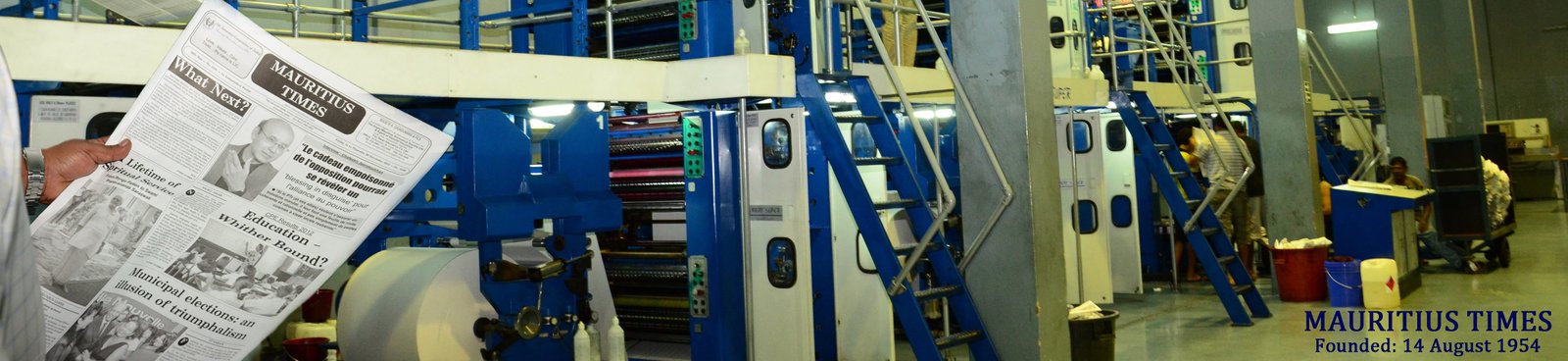
The same year, he established the Nalanda Press, laying the groundwork for what would become one of his most enduring contributions: the founding of the Mauritius Times in 1954. Conceived in response to the biases of sections of the local press, the newspaper quickly became a powerful platform for advocacy and reform. Through its pages, Beekrumsing Ramlallah championed causes such as access to education, social justice, and political representation, while defending the dignity and aspirations of the common man.
The Mauritius Times was not merely a publication; it was a movement. Its campaigns — most notably “Admit Our Children” and the opposition to Proportional Representation — mobilised public opinion and influenced policy decisions. The paper’s use of political cartooning and its willingness to confront entrenched interests made it a formidable voice in the struggle for a more equitable society.
Beekrumsing Ramlallah’s transition into politics was a natural extension of his activism. Elected to the Legislative Assembly in 1959 with an overwhelming mandate, he served as Parliamentary Secretary in key ministries, including Health and Commerce. His tenure was marked by a series of forward-thinking initiatives: promoting preventive healthcare, advocating for consumer protection, supporting small-scale industries, and introducing measures to improve education. Yet, true to his principles, he eventually chose to step away from parliamentary politics, returning to journalism where he felt he could speak more freely and effectively.
Perhaps one of his most lasting legacies lies in the preservation of the Aapravasi Ghat. At a time when the historic Immigration Depot was neglected and its invaluable records left to deteriorate, he recognized its significance as a symbol of ancestral heritage. Through persistent advocacy, he mobilised support to restore the site, culminating in its recognition as a national monument in 1987 and later as a UNESCO World Heritage Site in 2006. His efforts ensured that future generations would have a tangible link to their past.
The Special Edition of Indradhanush not only chronicles these achievements but also situates Beekrumsing Ramlallah among a pantheon of Mauritian figures who rose from humble origins to leave an enduring impact. As Madhukar Ramlallah noted in his address at the launch, the true measure of such individuals — especially public figures dedicated to politics or social work — lies in what outlives them: the institutions they build, the ideas they champion, and the lives they transform.
Beekrumsing Ramlallah was defined by his integrity, courage, and vision, as well as by his remarkable ability to unite people across divides. His life was guided by the principle of “simple living and high thinking” — a philosophy that informed both his personal conduct and his public service.
In bringing out this Special Edition, Indradhanush has performed a vital cultural function: preserving memory, inspiring reflection, and reaffirming the values that underpin national progress. It is also a reminder of the power of the written word — not only to document history, but to shape it.
Mauritius Times ePaper Friday 1 May 2026
An Appeal
Dear Reader
65 years ago Mauritius Times was founded with a resolve to fight for justice and fairness and the advancement of the public good. It has never deviated from this principle no matter how daunting the challenges and how costly the price it has had to pay at different times of our history.
With print journalism struggling to keep afloat due to falling advertising revenues and the wide availability of free sources of information, it is crucially important for the Mauritius Times to survive and prosper. We can only continue doing it with the support of our readers.
The best way you can support our efforts is to take a subscription or by making a recurring donation through a Standing Order to our non-profit Foundation.
Thank you.


