2026 Kicks Off
Carnet Hebdo
By Nita Chicooree-Mercier
Official statements in Mauritius are currently stoking expectations for a 2026 economic rebound — one that might finally curb the rising cost of commodities if international conflicts subside. These statements are at least honest enough to admit that domestic inflation is primarily driven by external volatility. While a shift in the global climate could ease the cost of living, we must remain wary; the hollow political promises shouted from rooftops during electoral campaigns are designed only to entice the gullible.

As we scan the horizon for silver linings, several geopolitical hurdles remain. If American firms controlling Venezuelan oil production dictate export costs to China, global market prices will inevitably react. Similarly, any hope for peace between Russia and Ukraine is shattered whenever negotiations are answered by a fresh barrage of missiles. Attempting to isolate the Russian leadership through “Hollywood-style” tactics — reminiscent of the treatment of Maduro — is a gamble that will likely alienate the Global South. Vladimir Putin is of a different mettle than the corrupt South American leaders entangled in drug trafficking; any plan to destabilize a BRICS leader should be abandoned for the sake of global stability.
Meanwhile, the revolts in Iran against theocratic tyranny and economic despair create a powder keg. If Russia and China back Iran against US military intervention, the risk of full-fledged warfare looms large. Even in isolation, Iran’s erratic nuclear threats have placed the region on maximum alert. With reports of US fighter jets deployed and citizens evacuating, American military superiority may soon paralyze the regime, potentially stabilizing the Strait of Hormuz — a maritime artery where Israel is also expanding its influence via support for Somaliland. Whether these shifts will actually lower energy prices remains to be seen. While we hope for peace in Ukraine and the Middle East, the world also watches nervously as the US manages “de-dollarization” without collapsing global markets.
Amidst this turmoil, a few bright spots emerge: trade deals are being quietly negotiated across several borders. Though 2026 begins under a cloud of uncertainty, there is hope the sky will clear. The real question is whether Mauritius is prepared to seize the resulting opportunities.
* * *
Tourism alone cannot sustain us…
Tourism reports suggest that 2025 lacked a traditional “low season.” However, as the European middle class loses purchasing power, the Ministry of Tourism is pivotally targeting Russia and Eastern Europe. We must be realistic: the upper-middle classes of China and India typically prefer destinations rich in historical monuments and artifacts. For them, “Sun, Sea, and Sand” is a one-time novelty. Conversely, Europeans are loyal patrons of island life, yet in lean times, they tend to stay closer to home.
Is our position truly secure? Mauritius recently declined an offer from Israel’s national carrier — a decision made with political blinkers to appease specific crowds, ignoring long-term economic benefits. Smart countries prioritize smart partnerships. Consider how Nvidia is expanding into Israel, creating ten thousand high-tech jobs. A leadership attuned to the importance of innovation adopts a rational, pragmatic stance; yielding to biased lobbies and aligning with countries of dubious credentials only stunts national growth.
Meanwhile, hotel moguls continue to complain about airfares, demanding the national carrier subsidize costs to pad their own profits. This begs the question: despite the influx of tourists, has the hotel industry over-expanded beyond its capacity to fill rooms year-round?
Finally, there is the matter of our capital’s hygiene. Those who view Port Louis only from the comfort of their offices may express satisfaction, but they are shielded from the stench of wastewater and urine on Bourbon and Pasteur Streets. Years ago, the “Porlwi by Light” festival masked this decay with dancing lights, but it couldn’t hide the garbage. Our modern “night markets” lack the charm of European Christmas markets, where tradition and quality meet. Instead, we offer low-quality trinkets and blaring music to a low-income demographic — a spectacle often fuelled by media stunts rather than genuine cultural value.
While marketing strategies for hiking and cultural tourism have seen some success, the sector cannot be stretched indefinitely. A diversified pool of visitors is a helpful short-term fix, but tourism alone cannot sustain us if we ignore the structural decay beneath the surface.
Mauritius Times ePaper Friday 16 January 2026
An Appeal
Dear Reader
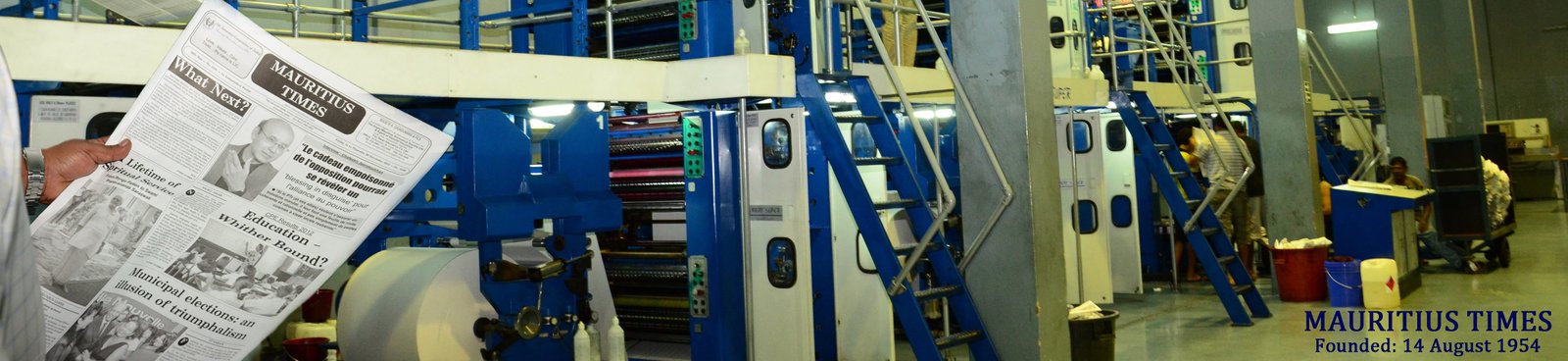
65 years ago Mauritius Times was founded with a resolve to fight for justice and fairness and the advancement of the public good. It has never deviated from this principle no matter how daunting the challenges and how costly the price it has had to pay at different times of our history.
With print journalism struggling to keep afloat due to falling advertising revenues and the wide availability of free sources of information, it is crucially important for the Mauritius Times to survive and prosper. We can only continue doing it with the support of our readers.
The best way you can support our efforts is to take a subscription or by making a recurring donation through a Standing Order to our non-profit Foundation.
Thank you.


